


Kids are known for their endless energy, running, playing, and turning everyday moments into adventures. But you might also notice days when that energy feels a little lower, or they’re just not quite themselves.
It’s not always easy to know what’s behind those shifts. Changes in sleep, routine, and growth can all play a role, but in some cases, low iron levels may also be a factor.
Here’s how to spot a few signs that may be associated with low iron, and what to do next.
Signs of iron deficiency in kids
Signs of low iron levels can be subtle and often look like everyday ups and downs. Rather than trying to figure it out on your own, focus on noticing patterns over time. If something feels out of character and you’re seeing more than one sign, it may be worth taking a closer look.
- Low energy that feels out of character
You might notice your child tires more easily, needs extra breaks during play, or has less interest in staying physically active. Look for a change from their usual energy, not just one off day. - Looking more pale than usual
Your child’s cheeks or lips may look lighter than normal, or their complexion may seem a bit washed out. This can be subtle, so compare over a few days in similar lighting. - Mood or focus changes
You may notice increased irritability or difficulty concentrating. These shifts in mood are easy to link to sleep or routine, so pay attention if they’re ongoing or paired with other signs.
The signs above can be associated with low iron, but they’re not specific to it. They can also come from sleep changes, growth spurts, stress, illness, or a busy week.
That’s why it’s important not to rely on symptoms alone. Confirming low iron requires a healthcare assessment and may include blood tests.
Instead, think of these signs as part of a bigger picture. Patterns over time, along with risk factors, can help guide your next steps.
Kids at higher risk for low iron
Low iron is common in growing kids, especially when their needs outpace what their diet provides. Risk factors don’t mean deficiency, but they can increase the chances.
Your child may be more likely to fall short on iron if they:
- Are a picky eater or consume a limited variety of foods
- Don’t regularly eat iron-rich foods
- Fill up on a lot of cow’s milk
- Follow a restrictive diet without enough variety
- Are going through a rapid growth phase
For older kids, menstruation can also increase iron needs as the body uses iron to make red blood cells that need to be replenished during their cycle.
If a few of these apply, or you’re noticing persistent changes that feel out of character for your kiddo, it’s a good idea to check in with your healthcare provider. Assessing iron levels may include a basic blood test.
Iron-rich foods for picky eaters
Starting with food is a great first step to build small, consistent habits.
Iron comes from:
- Heme sources (often easier to absorb): meat, poultry, fish
- Non-heme sources: beans & lentils, tofu, fortified cereals, leafy greens, pumpkin seeds
Heme iron is generally easier to absorb. Non-heme iron is still important but isn’t absorbed as easily. If your child is picky, start with what they already accept. Aim for one “iron moment” each day, like fortified cereal at breakfast or adding beans or meat to a meal.
How to help your child better absorb iron
Did you know that pairing iron-rich foods with vitamin C helps improve absorption?
Try:
- Berries or citrus added at breakfast
- Fruit alongside meals
- Vegetables like peppers, tomatoes or broccoli at lunch or dinner
No complicated meal planning needed. Small additions can make a difference!
Milk and iron: what parents should know
Milk can be a nutritious part of a child’s diet, but drinking a lot of it can make it harder to get enough iron. That’s because milk is really filling, and when kids fill up on it, they may eat less of other foods, like iron-rich goodies.
Milk and calcium products can also slightly reduce how well iron is absorbed when consumed at the same time, so spacing out dairy and iron-rich meals can help.
Offering iron-rich foods regularly and spreading dairy intake across the day can help support a more balanced routine.
When to talk to a healthcare provider about iron for kids
If you’re noticing changes that feel persistent or out of character, it’s a good idea to check in with a healthcare provider, which involves taking your kiddo for a basic blood test.
Gentle iron support
For some families, meeting iron needs through food alone can be challenging, especially during picky eating, rapid growth, or when following a vegan or vegetarian diet. In those cases, an iron supplement may be considered as part of a broader plan.
Orange Naturals Kids Iron is one option to explore if supplementation is recommended, offering: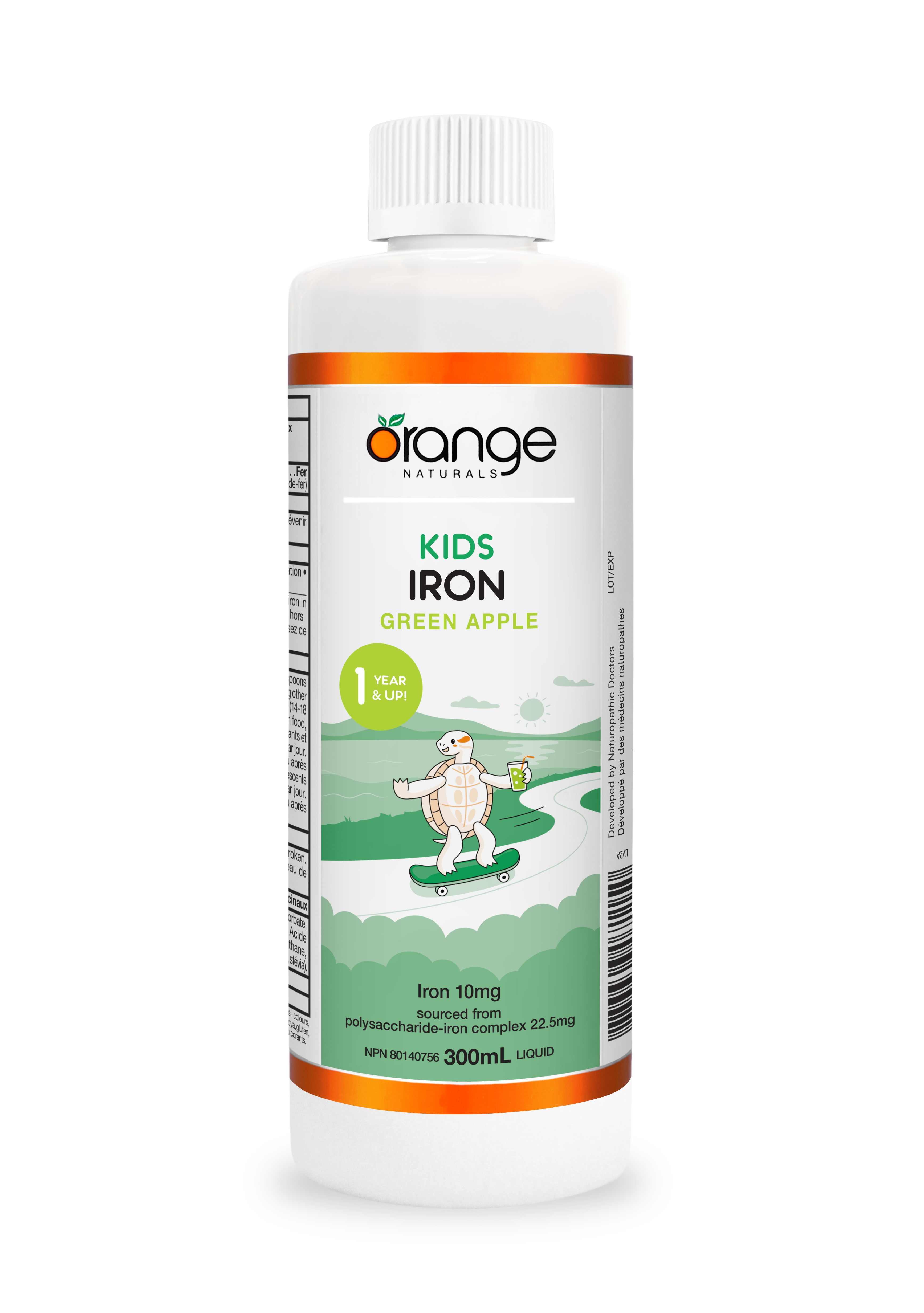
- 10 mg of elemental iron per dose (the amount of iron available for the body to use)
- A polysaccharide-iron complex, designed to be gentle on little tummies
- A liquid format that’s easy to take
- A natural green apple flavour
- Suitable for children ages 1 and up
Small, consistent nutrition choices can help support your child’s energy and growth. Sometimes changes in energy or behaviour have an underlying reason, and knowing the signs can help you decide how to move forward in a way that works best for your child.